
TMR Sensors – Precision and Sensitivity
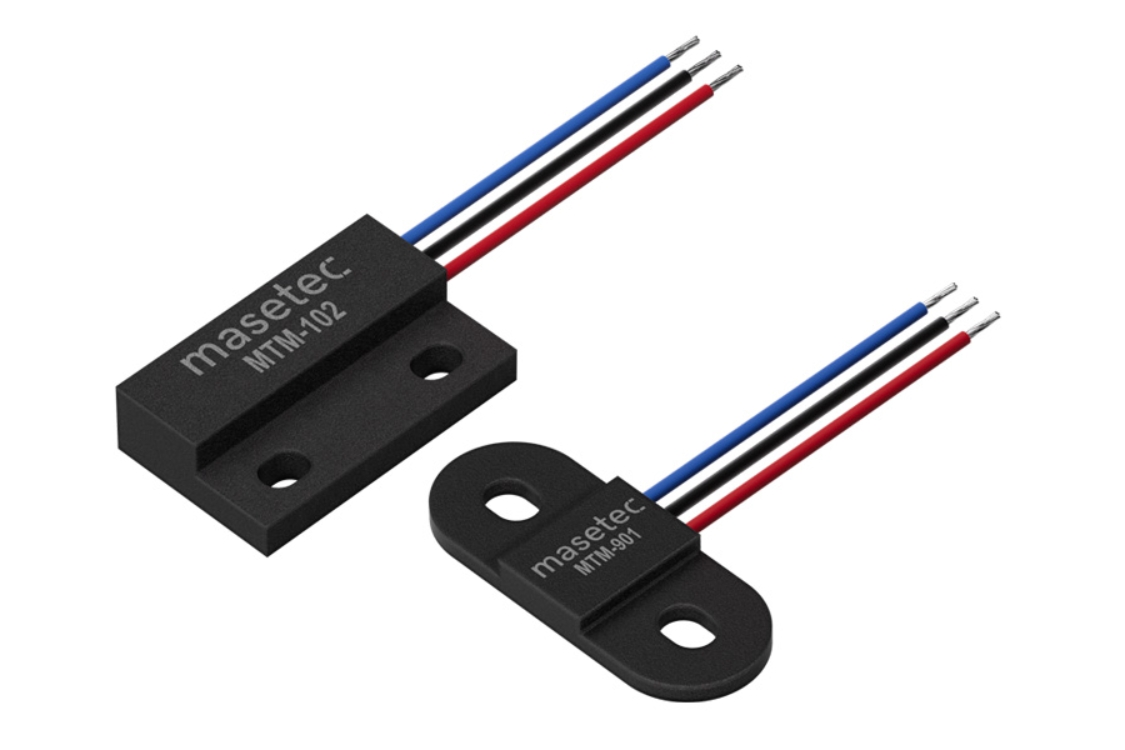
Our TMR sensors measure lengths, positions, and rotation angles with the highest precision and sensitivity. They are non-contact, high-resolution, and ideal for demanding, cross-industry applications.
Application Areas

Position Control, Non-contact Switching, Speed Measurement
All Advantages at a Glance
Available as standard and individually configurable:
Flexible in use, available both as a standard solution and customizable for specific requirements.
High-precision Measurement:
Extremely sensitive and accurate in detecting magnetic fields.
Space-saving Design:
Ultra-slim design for integration into compact and flat devices.
Low Power Consumption:
Efficient performance with minimal energy requirements, ideal for battery-powered applications.
Versatile Application Possibilities:
From position and speed detection to current measurement.
High Reliability:
Robust design for stable performance even under demanding conditions.
Fast Response Time:
Detects rapid changes in the magnetic field for real-time applications.
Long Service Life:
Durable and reliable performance through wear-free technology.
Simple Integration:
Easy to integrate into existing systems thanks to compact and standardized design.
Use of TMR Sensors

Structure of TMR Sensors
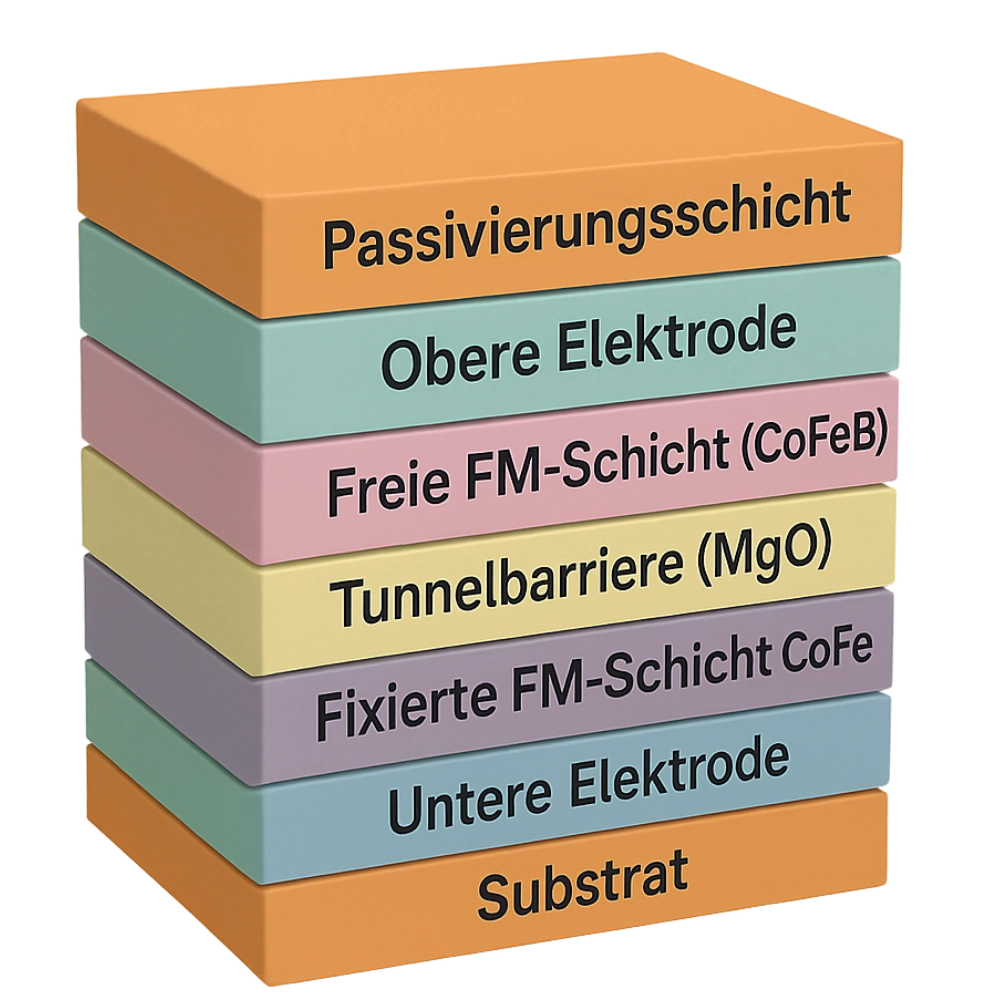
TMR (Tunneling Magnetoresistance) sensors are based on the magnetic tunnel resistance effect and consist of several precisely matched layers:
1. Magnetic Layers: Two ferromagnetic layers, one of which is fixed (reference layer) and the other is freely movable (free layer). The free layer reacts to external magnetic fields.
2. Tunnel Barrier: An ultra-thin insulating layer between the magnetic layers through which electrons tunnel and whose resistance changes depending on the magnetic field.
3. Signal Processing: Integrated electronics amplify and process the resistance signal to provide it as a digital or analog output signal.
4. Housing & Connections: Protective housings made of plastic or metal ensure robustness, while electrical interfaces allow for easy integration.
Due to their special structure, TMR sensors offer high sensitivity, low energy consumption, and are ideal for precise magnetic measurements.
How a TMR Sensor Works
A TMR (Tunneling Magnetoresistance) sensor uses the tunneling magnetoresistance effect to measure magnetic fields precisely. It consists of two magnetic layers separated by a thin insulation layer.
- With parallel magnetization, the resistance is low; with anti-parallel magnetization, it increases.
- An external magnetic field influences the magnetization of the movable layer and changes the resistance.
- This change in resistance is detected and converted into an electrical signal.
Thanks to high sensitivity and low energy consumption, TMR sensors are ideal for precise magnetic measurements.
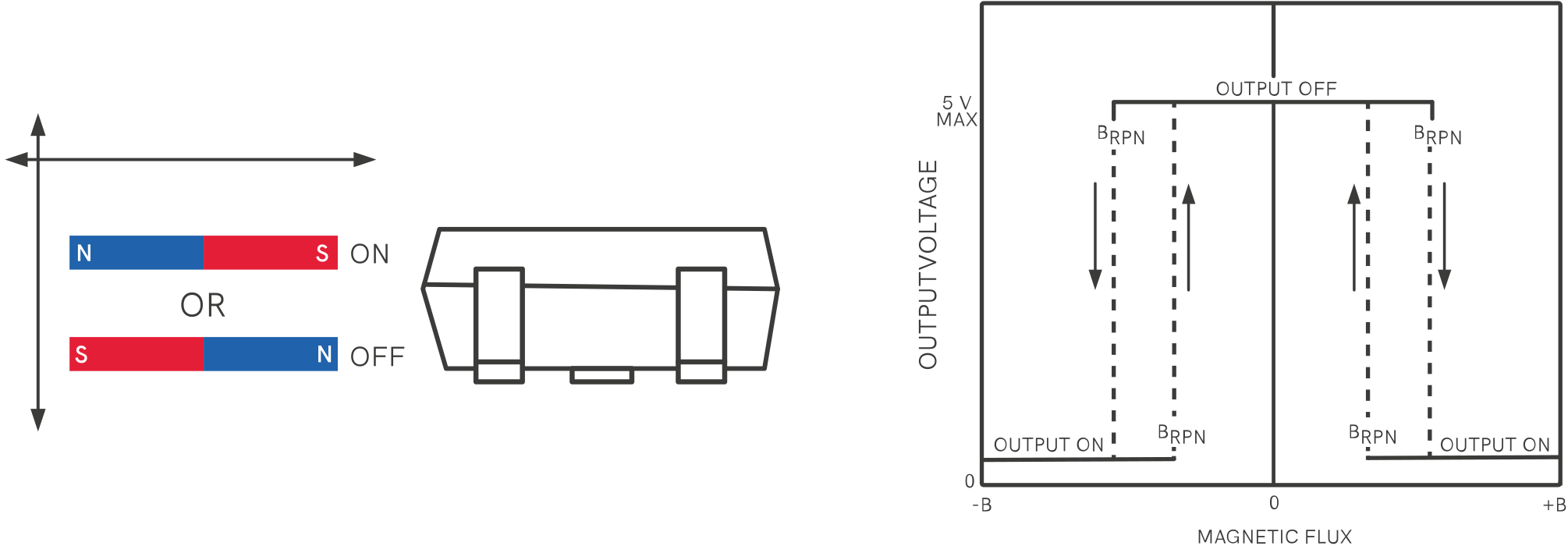
OMNIPOLAR
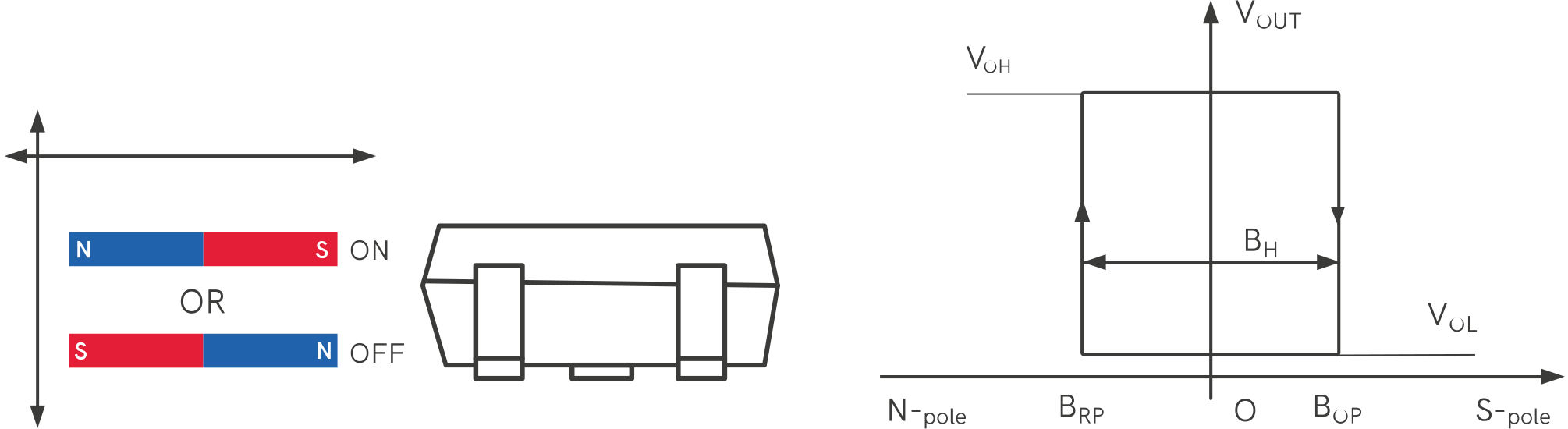
BIPOLAR
Which product are you looking for?
Our TMR Sensors at a Glance
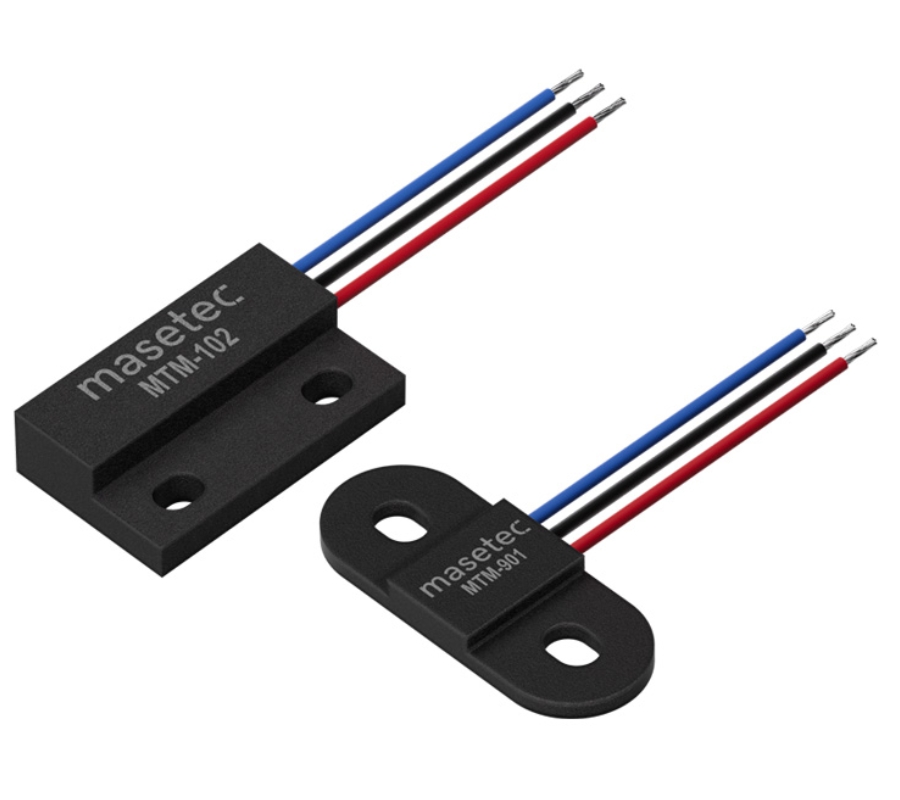
Flat Housing
High-precision measurements and ideal for applications with limited space

Do you require a customized solution?
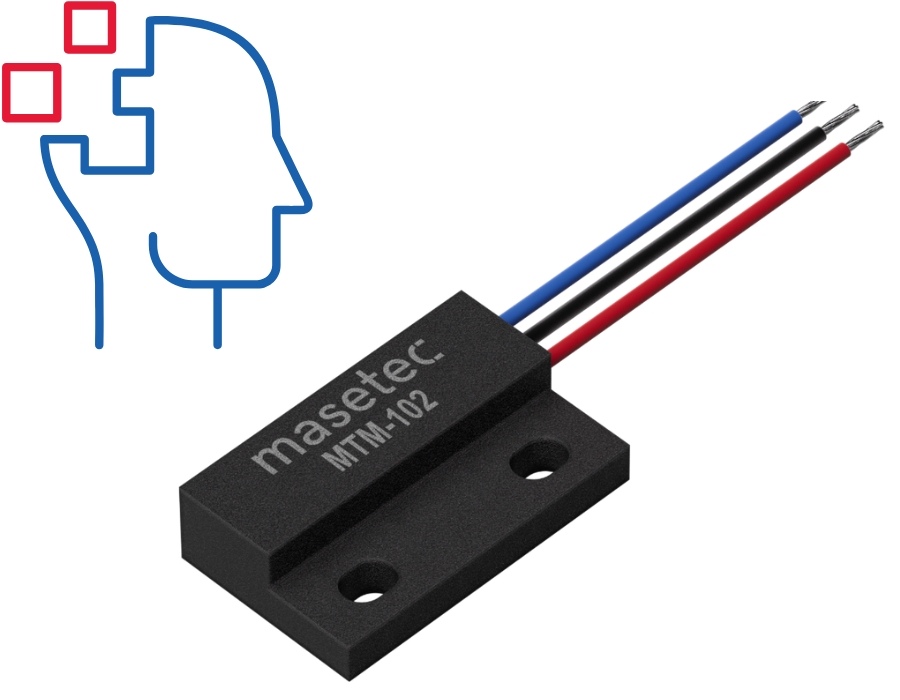
Customizing TMR Sensors
TMR (Tunneling Magnetoresistance) sensors offer high sensitivity and precision, making them attractive for a wide range of applications. For customer-specific, tailor-made TMR sensors, the following specific adjustments and specifications can be considered:
1. Sensitivity and Measuring Range
The sensitivity and measuring range of the sensor can be adjusted for specific applications to detect either very weak or very strong magnetic fields.
2. Output Signal
3. Specific Magnetic Properties
4. Connection Types
The type of electrical connections, such as cables, connectors, or PCB terminals, can be adapted to the specific requirements of the application.
5. Housing Material
6. Dimensions and Shape
7. Operating Temperature Range
Through these adjustments, TMR sensors can be effectively adapted for special applications in areas such as automotive engineering, industrial automation, medical technology, and consumer electronics.