
Hall sensors – durable & wear-free
Application Areas

Position monitoring, contactless switching, speed measurement
All benefits at a glance
Available as standard and individually configurable:
Flexible to use, both as a standard solution and customizable for specific requirements.
Precise detection:
Reliable detection of magnetic fields for position and motion sensing.
Space-saving design:
Low-profile design for easy integration into compact and space-critical applications.
Low power consumption:
Efficient performance with minimal power consumption, ideal for battery-powered applications.
Versatile application options:
From speed measurement and end-position detection to proximity switches.
High reliability:
Stable and consistent performance under varying environmental conditions.
Fast response time:
Immediate response to changes in the magnetic field for precise control.
Long service life:
Wear-free technology for long-lasting, reliable performance.
Easy integration:
Easy to integrate into existing electronic systems thanks to a standardized, compact design.
Applications of Hall sensors
In recent years, the use of Hall sensors has become widespread—and for good reason. These small but powerful sensors are used in almost every industry. In the automotive sector, for example, they detect the exact position of the shift lever in an automatic transmission. In the kitchen, they measure the amount of water in your coffee machine, while in industry they determine magnetic flux density. Thanks to their compact design and flexible housing shapes, Hall sensors fit into almost any space and can demonstrate their impressive capabilities there.

Design of Hall sensors
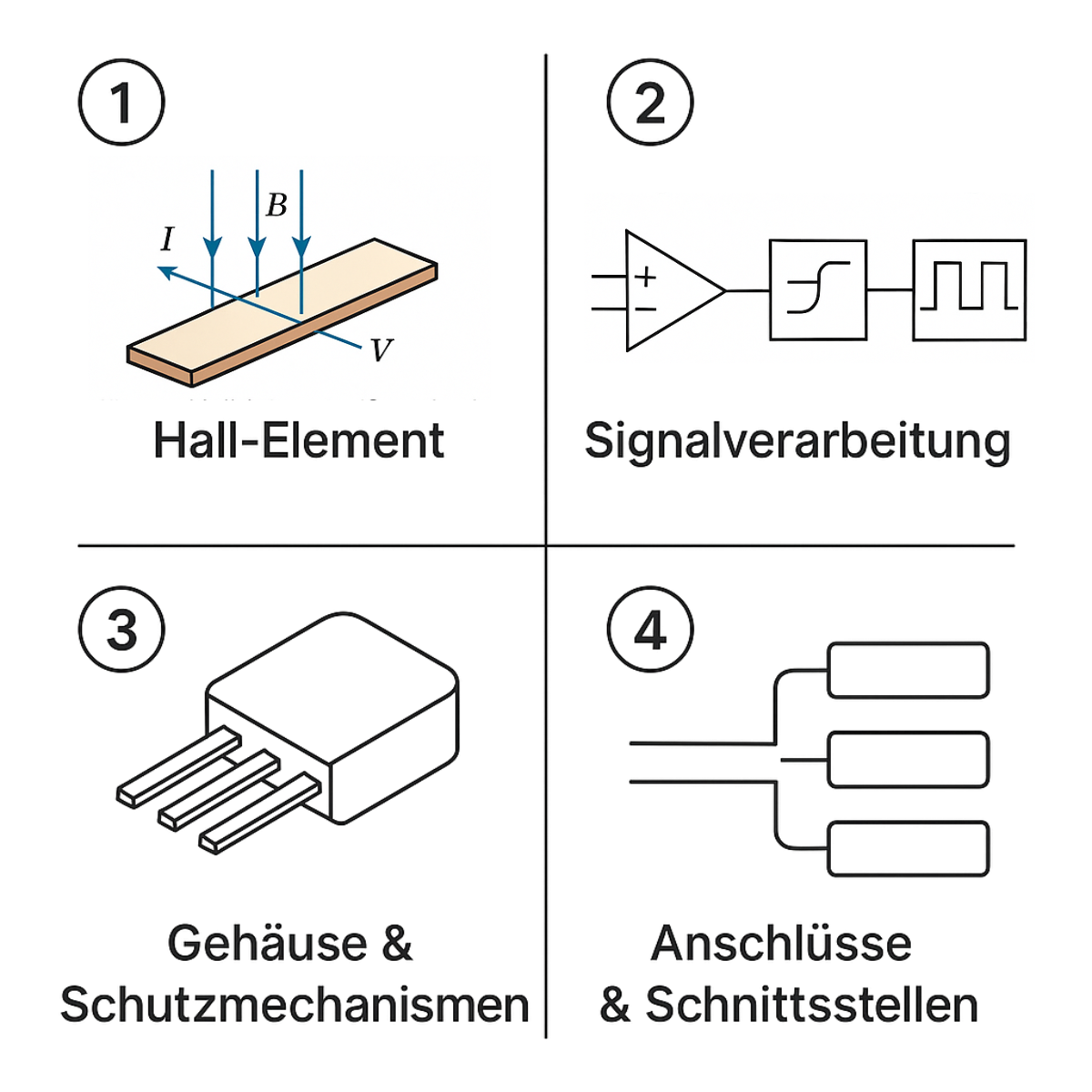
Hall sensors are based on the Hall effect and consist of several key components:
1. Hall element: A thin semiconductor strip that generates a voltage transverse to the current flow when exposed to a magnetic field.
2. Signal processing: Amplifiers and converters condition the Hall signal and convert it into a usable output signal (analog or digital).
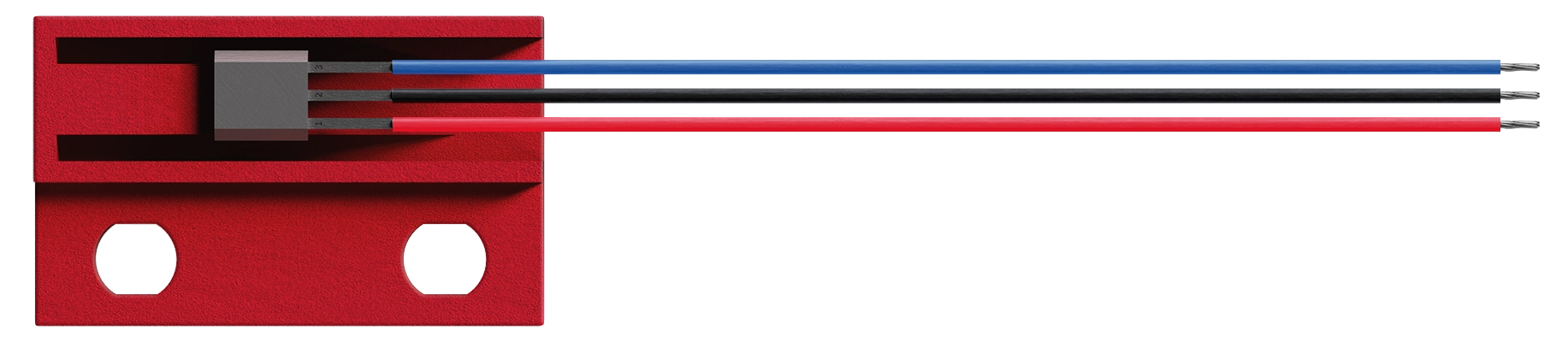
3. Housing & protective mechanisms: Robust plastic or metal housings protect the sensor from environmental influences such as dust, moisture, or temperature fluctuations.
4. Connections & interfaces: Electrical contacts or digital interfaces enable easy integration into control systems.
Thanks to their precise design, Hall sensors are reliable, wear-free, and versatile for position, speed, and current measurement.
How a Hall sensor works
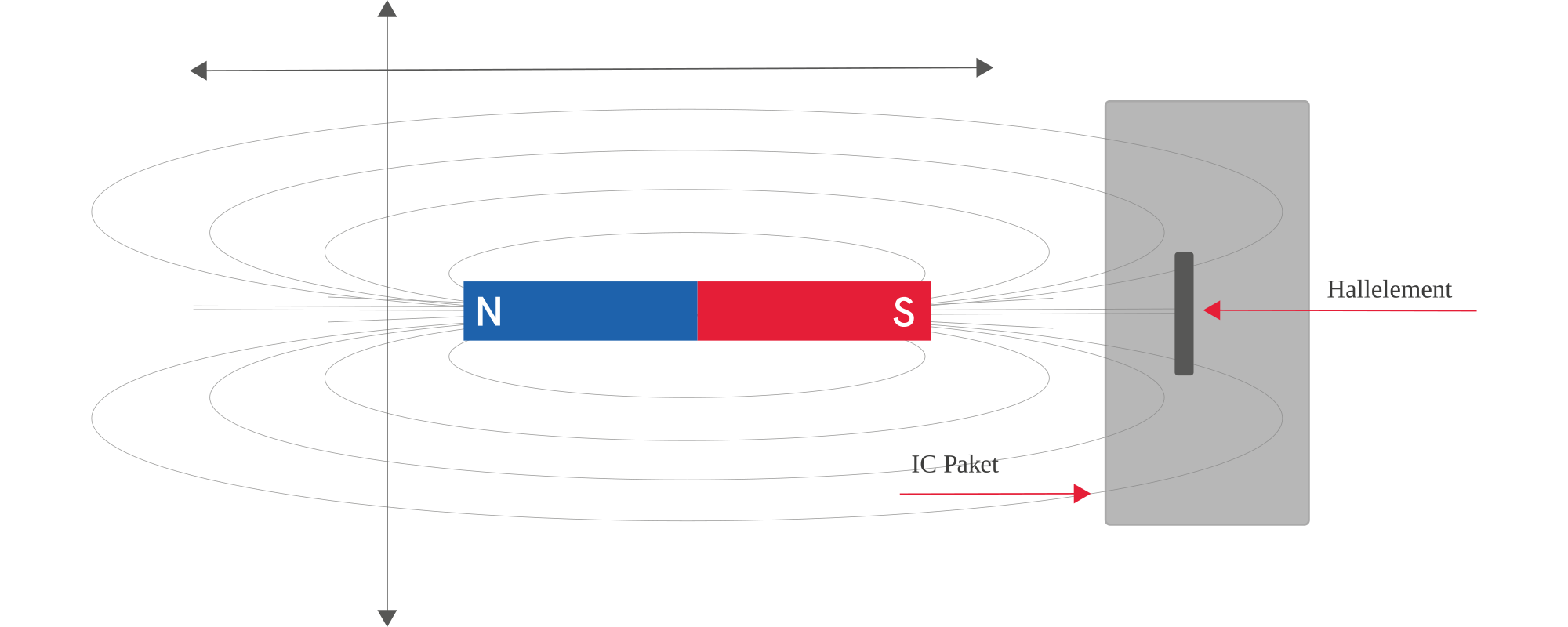
A Hall sensor uses the Hall effect to measure magnetic fields. When current flows through the Hall element and a magnetic field acts perpendicular to it, a measurable Hall voltage is generated.
- The Hall voltage changes in proportion to the magnetic field strength.
- Integrated signal processing amplifies and converts the signal into an analog or digital output value.
- The processed signal can be used for position, speed, or current measurement.
Thanks to their wear-free and precise operation, Hall sensors are ideal for industrial and automotive applications.
Hall effect illustration
Which product are you looking for?
Our Hall sensors at a glance
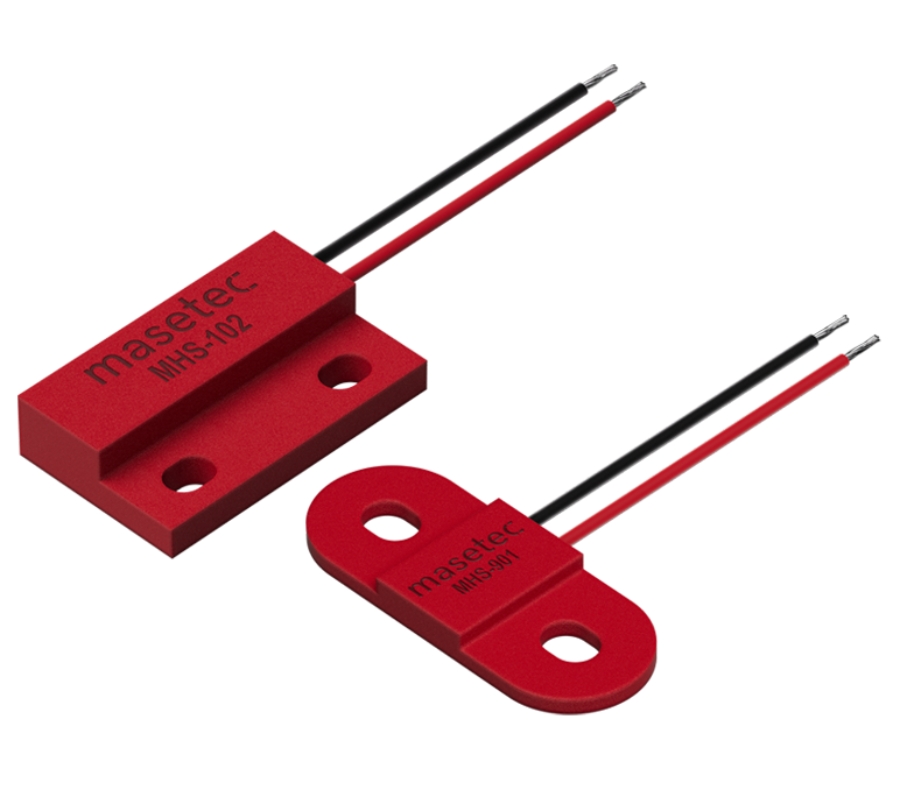
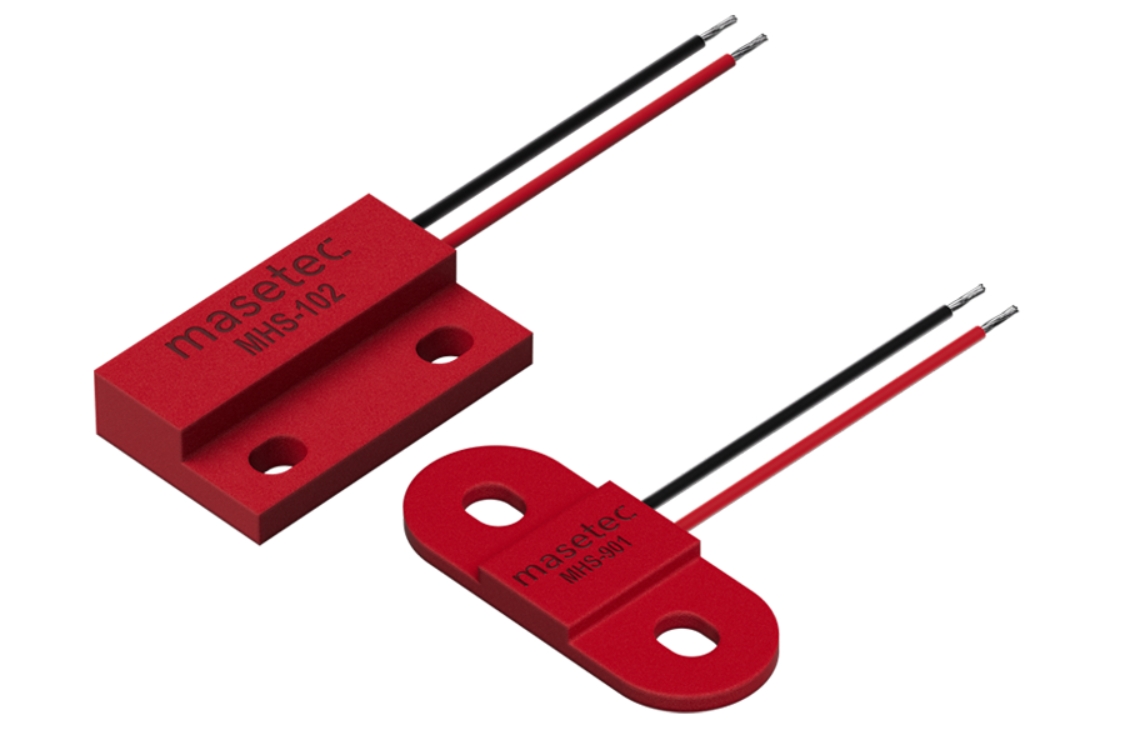
Flat housing
Precise magnetic field measurements and ideal for space-saving applications

Do you need a custom solution?
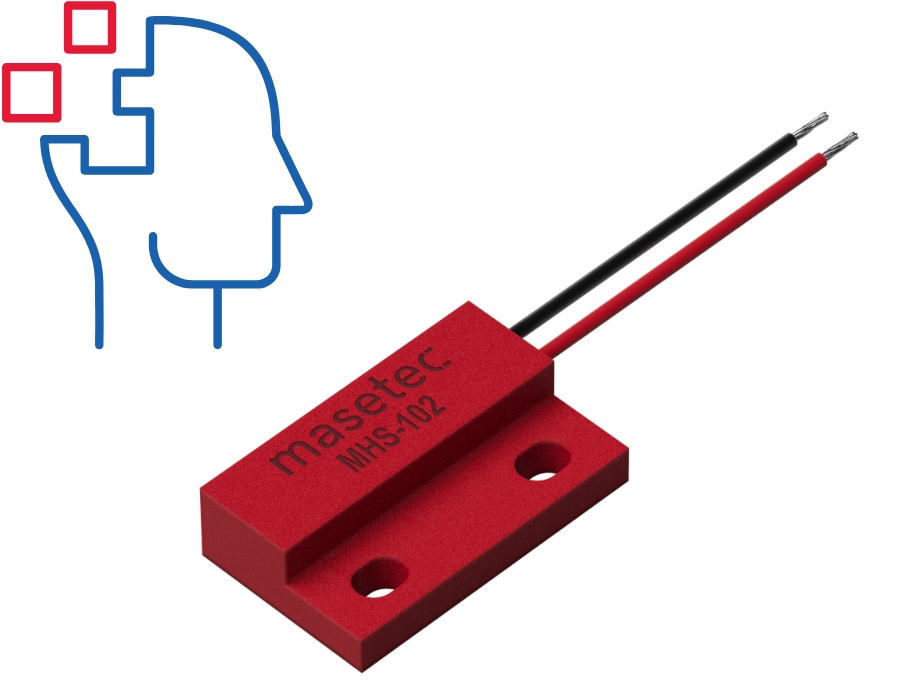
Customizing Hall sensors
Hall sensors offer high sensitivity and precision, making them attractive for a wide range of applications. For customer-specific, tailor-made Hall sensors, the following specific adjustments and specifications can be considered:
1. Sensitivity and measuring range
The sensor’s sensitivity and measuring range can be adapted for specific applications to detect either very weak or very strong magnetic fields.
2. Output signal
3. Specific magnetic characteristics
4. Connection types
5. Housing material
6. Dimensions and shape
7. Operating temperature range
The materials and design of the Hall sensor can be engineered for operation across different temperature ranges.
These adaptations make it possible to use reed sensors in a wide range of applications, from simple position sensors to complex safety and control systems.
FAQ Hall sensors
Is an external circuit required for switching Hall sensors?
Yes, Hall sensors require a circuit as well as a driver.
What is the Hall effect?
A semiconductor material brought close to a magnetic field generates a voltage proportional to the strength of the magnetic field.
Can I also buy only the Hall IC?
Yes, that is also possible. Simply contact us.
Can other housing shapes also be realized?
Of course. With little investment, we can realize any housing shape, or we already have special housings available from our reed-based sensors.
Can I also specify the Hall IC and manufacturer?
That is not a problem either. Tell us what you need, and we will try to realize it.
Is there only one standard?
No, of course not. We can customize our magnets specifically for your application.