



Hard ferrite magnets (Ferrites)
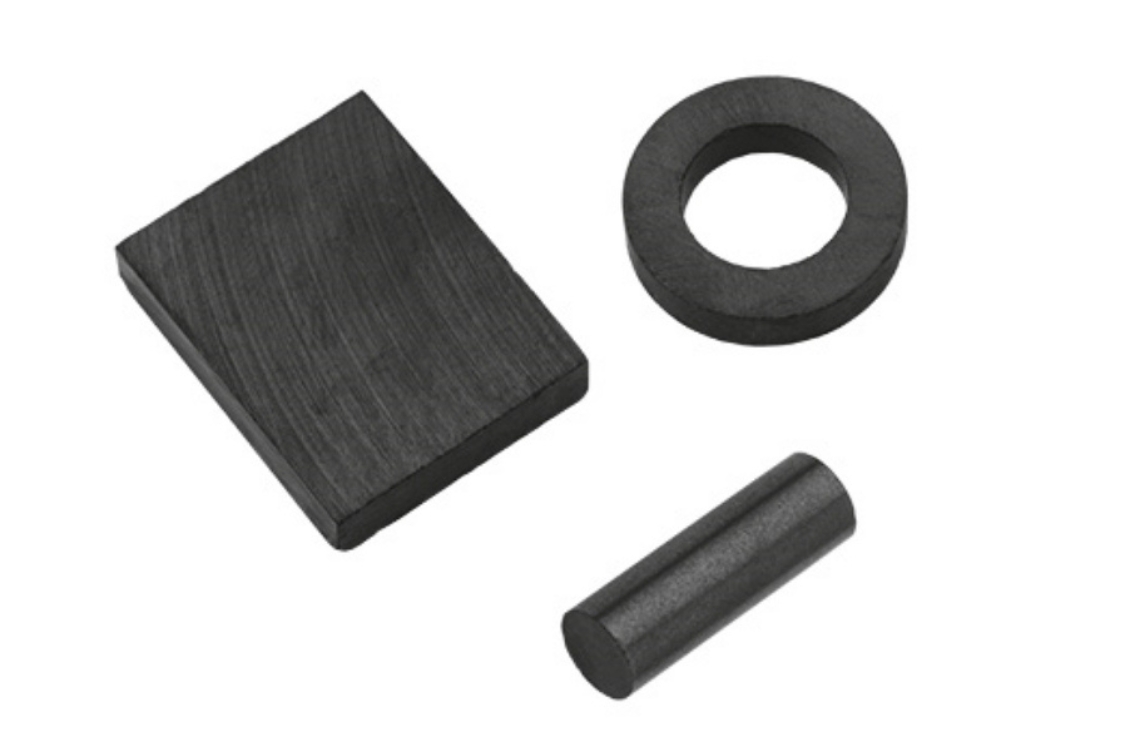
Magnets made of ceramic materials are the most commonly used worldwide because they are versatile, corrosion-resistant, and cost-effective. masetec offers you a wide range of hard ferrite magnets.
Areas of application

Position control, non-contact switching, speed measurement
All advantages at a glance
Cost-effective:
Very good price-performance ratio, ideal for mass applications.
Corrosion-resistant:
Rustproof, no additional coating required.
Temperature-resistant:
Operable from -40°C to 250°C without loss of performance.
Good chemical resistance:
Insensitive to many chemicals and solvents.
Versatile in use:
Frequently used in loudspeakers, electric motors, and magnetic closures.
Caution with hard ferrite magnets
Limited adhesive strength:
Lower magnetic strength compared to NdFeB or AlNiCo magnets.
Risk of breakage:
Brittle, not shock- or impact-resistant, can splinter easily.
Use of hard ferrite magnets
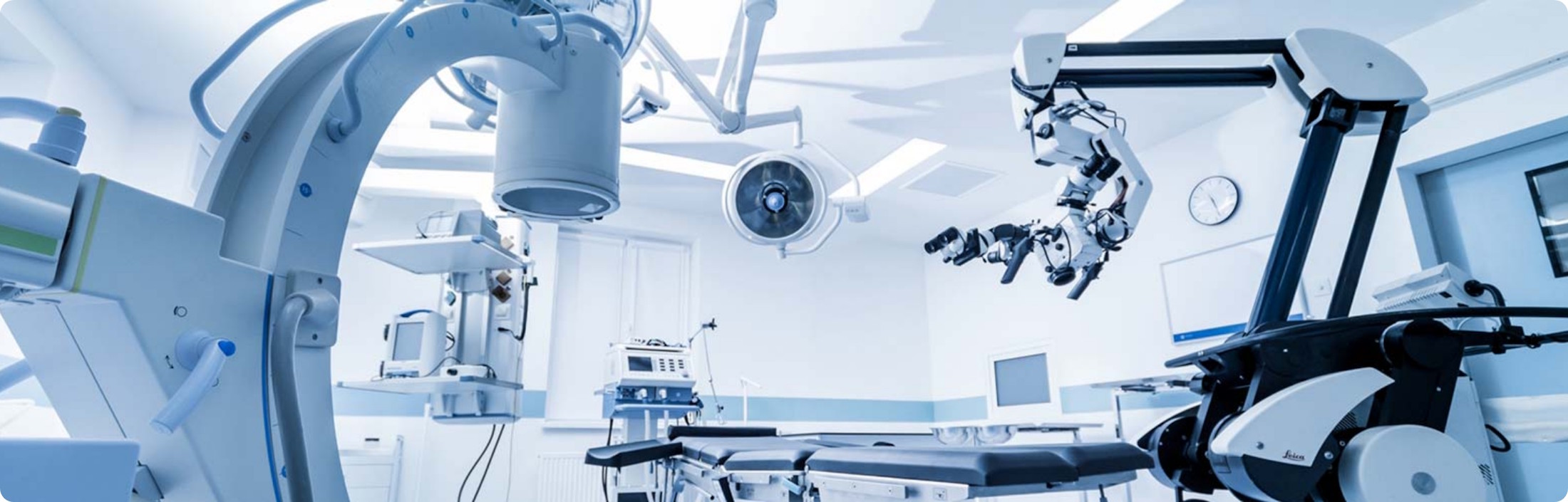
Due to their low price and safe handling, hard ferrite magnets are particularly popular for household use – for example, as whiteboard magnets. These robust magnets are also used in electronics, electrical engineering, the automotive industry, medical technology, and many other sectors.
Structure of hard ferrite magnets
Hard ferrite magnets are manufactured from iron oxide and barium carbonate or strontium carbonate.
Production of hard ferrite magnets
There are two processes for manufacturing hard ferrite magnets: Isotropic hard ferrite magnets are created by finely grinding the raw materials, granulating them, pressing them in a magnetic field, and sintering them. Anisotropic magnets are produced using dry or wet pressing processes. In the wet pressing process, the alloy powder is mixed with liquid to form an emulsion and injected into the pressing tool via filling channels. During the subsequent compaction under the influence of a magnetic field, part of the liquid is extracted. The remaining moisture must be removed by air or oven drying before sintering. The more complex wet pressing process achieves higher magnetic properties.
Coatings on hard ferrite magnets
Since hard ferrite magnets are heat- and corrosion-resistant, a coating can be omitted. Furthermore, a coating would disproportionately increase the low price of hard ferrite magnets.
Magnet selection guide
| ENERGY PRODUCT | Ferrites | AlNiCo | NdFeB |
| COSTS | Ferrites | AlNiCo | SmCo |
| MAX. OPERATING TEMPERATURE | NdFeB | SmCo | AlNiCo |
| CORROSION RESISTANCE | NdFeB | AlNiCo | Ferrites |
| RESISTANCE TO DEMAGNETIZATION | AlNiCo | Ferrites | SmCo |
| MECHANICAL STRENGTH | Ferrites | NdFeB | AlNiCo |
| TEMPERATURE COEFFICIENT | AlNiCo | SmCo | Ferrites |
| MAGNETIC STABILITY AT HIGH TEMPERATURES | NdFeB | Ferrites | SmCo |
| Energy product | Ferrites | AlNiCo | NdFeB |
| Costs | Ferrites | AlNiCo | SmCo |
| Maximum operating temperature | NdFeB | SmCo | AlNiCo |
| Corrosion resistance | NdFeB | AlNiCo | Ferrites |
| Resistance to demagnetization | AlNiCo | Ferrites | SmCo |
| Mechanical strength | Ferrites | NdFeB | AlNiCo |
| Temperature coefficient | AlNiCo | SmCo | Ferrites |
| Magnetic stability at high temperatures | NdFeB | Ferrites | SmCo |
◀ Please scroll table sideways ▶
Which product are you looking for?
How can I help you?
I look forward to meeting you and working together to find the ideal solution for your challenge.


Call me:

Send us an email
jb@masetec.de